Showing posts with label Boarding School. Show all posts

Monday, September 21, 2015

Life with Nuns


My friends are sometimes startled to learn that I spent three years in a Catholic school.  A Catholic girls' school.  A Catholic girls' boarding school.
 
I was only twelve when I was deposited with the nuns, in a pre-Vatican II environment of fully habited nuns, Latin masses, saints' days, required daily religion classes, and words like refectory and collation.


It's a long story, one which I won't relate here.  But it might reflect a thread of grace, one that began to unwind in the 1890s when my very Methodist great-grandmother drove her buggy ten miles through the country to the convent for piano lessons, and was most recently in evidence when I went to our reunion last Saturday.
 
As I visited with the hundred or some women there for lunch, reports, hugs, and laughter, I mused on the experiences we had shared, so different from those of most of our contemporaries.  
 
The navy blue skirts, white blouses, and saddle shoes.  The little alcoves, beds and side tables lining the length of long, third-floor dormitories and separated from one another by white curtains.  The midnight conversations as we curled up in our nightgowns in wide window wells overlooking well-maintained grounds. 
 
The many efforts we made to break into the off-limits cloistered hallways secreted behind closed, unmarked doors. The evening study groups, radios blaring and books strewn across desks as we tried to unravel the mysteries of algebra and dreamed of encounters with Paul McCartney. The Saturday afternoon sewing classes, from which some of us routinely escaped to undisclosed locations. 
 
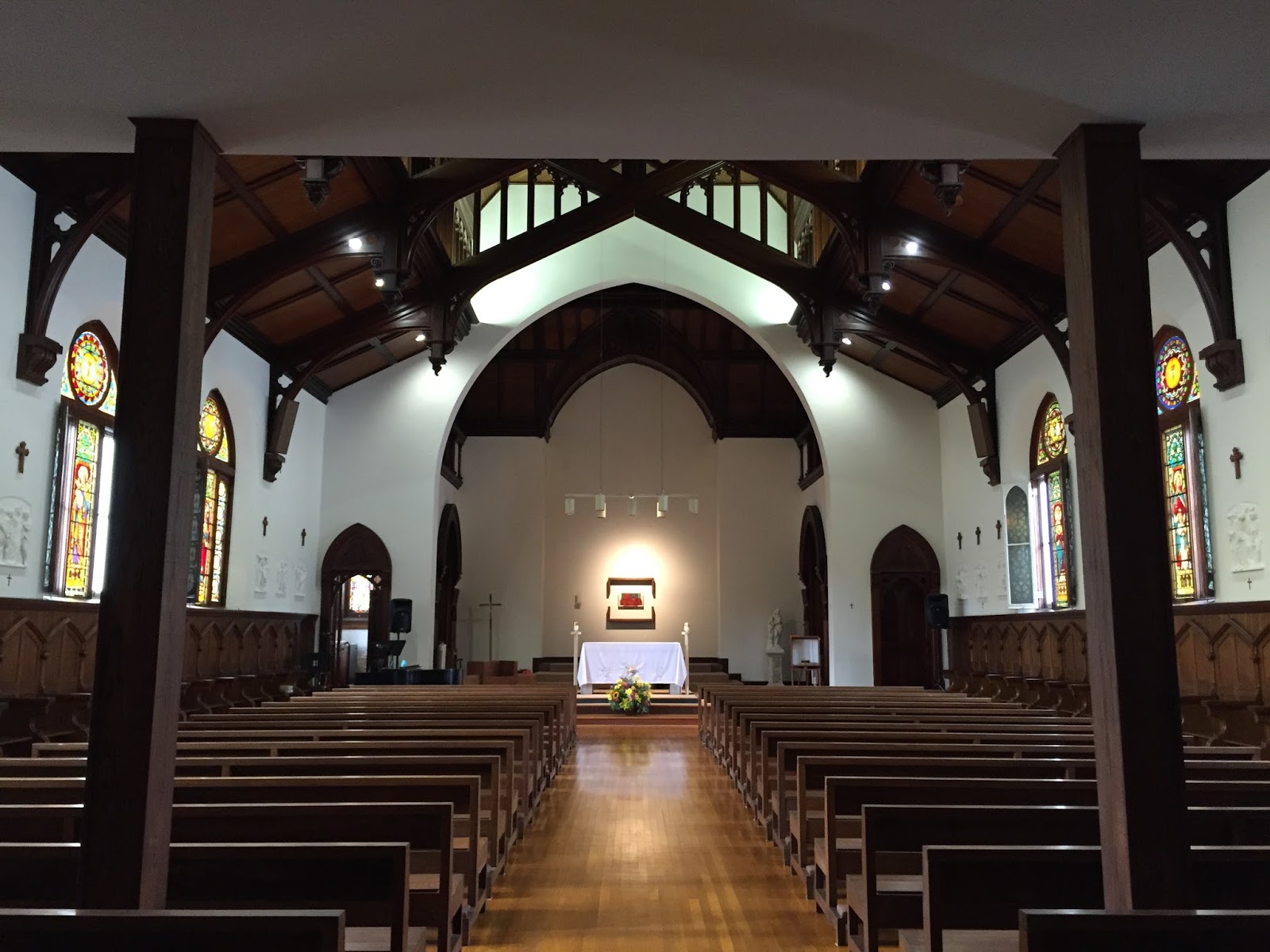
The alternating mystery and boredom of the Latin mass.  The glowing woodwork and high windows and ceilings we took for granted.  The very, very distinct personalities of the nuns, brilliant and highly educated women who presumed that we would, too, would grow into forces to be reckoned with. 
 
Thanks to modern technology, we are all re-connected,  30 and 40 and 50 years after we shared convent school life.  A couple of the nuns attended my ordination four years ago.  They really love us.  We really love them. 
 
Real, true, amazing, grace.


Monday, March 25, 2013

Boarding School Years - Protestant (Part I)

This journey back in time might take a couple of days . . .     .
 
My father's plan for all of us kids was that we would attend boarding school, as he and his brothers had done.  I ended up at what was then the Northfield School for Girls, founded by evangelist D.L. Moody in the 1870s.  The Mount Hermon School for Boys has been opened a couple of years later across the Connecticut River.  D.L. or Dr. Moody -- we tended to refer to him one way or the other -- envisioned schools that would provide outstanding educations for young people unable to afford the traditional New England prep school fees.  In fact, he saw Northfield as a base for preparing young women to become missionaries, whom he thought should go into the field only with the best of academics in their pockets.  He was born here, at the foot of what is still the Northfield Campus:


When people hear that I went to one of the schools founded by Dr. Moody, they immediately think "evangelist" and "Moody Bible Institute."  In fact, Northfield is an extremely progressive school. 

We were indeed required to attend chapel daily. (Okay, yes: I could tell you all the ways to exempt yourself without drawing the attention of the attendance takers, but in fact I loved chapel.  I would have described myself as an atheist in those days, but I reveled in the mid-morning respite, and I loved the music and preaching which came our way via some of New England's finest.) 

We were also required to take a religion course each year, which for my three years there meant the required classes in OT and NT and then an elective. Those first two classes meant that much of my first year of seminary decades later was a repeat ~ a good thing, due to the 35-40 hours a week I had to invest in keeping afloat in Greek.    And as one of my friends has since said, "Isn't it amazing that they took us so seriously?  That our first discussion in religion at the age of 15 was on the documentary hypothesis?"

My senior year elective provided me with an introduction to Freud, Bonhoeffer, Tillich ~ and, as usual, the more important learning that takes place outside the classroom.  It was the teacher for that course who asked me, as we walked to class through the snow one morning, where I was applying to college, and then castigated us all as "so parochial" in our reluctance to leave New England.  ( I later discovered that his degrees were from Chapel Hill, Duke, and Vanderbilt, which would explain why he recommended those schools to me that morning!)  At any rate, I did go to college in New England, but I have never forgotten that conversation. and have tried hard to be less parochial in my adult life.  I can't say that I've succeed, but I have tried.)
 
When I realized during my 9th grade year that a move from the comfort of the Catholic boarding school in which I had been ensconced since 7th grade was inevitable, I started looking closely at the catalogs that came via mail.  My father, I suppose, liked Northfield because the small classes were all run seminar-style around big tables, and because of its stratospheric academic reputation.  I was too angry to pay attention to those things.
 
I liked Northfield for one reason, and one reason only.  Most of the schools seemed to have been created entirely for wealthy New England families; even the dress code requirements reeked of elitism.  But Northfield girls, I discovered, had to work ~ preparing and cleaning up from all meals, cleaning the halls and classrooms ~ an hour each day. It was called "domestic work" ~ "dummy" was our name for it ~ and it governed our lives.  The biggest barrier to a week-end away from campus was finding someone to take over your dummy job -- either as an exchange or for pay.  I recall how flabbergasted we all were when one of our friends didn't show up for dummy -- she simply forgot.  You might forget your algebra assignment, but how could you possibly forget dummy?
 
This photo is from slightly before my era -- we did wear those smocks, but our caps were not so hideous.  The image is one of my very favorite dummy assignment ~ after-dinner tins.  Many girls hated tins ~ it was hard work to scrub those pots and pans clean!  But . . .  tins took so long for our dorm of 60 girls that it inevitably cut into our evening 7:00-9:30 study hall, during which we were supposed to be in our rooms or in the library.  Senior year we could go and do whatever we wanted, but after-dinner tins was how I took care of the problem junior year.   On warm spring evenings, we turned up the radio and danced around the  kitchen for a long as we could, until Mrs. Powell materialized to say, "Girls!  The tins!"
 
 
I was not a good student in high school (actually, except for English and French and 12th grade religion, I was a TERRIBLE student in high school), and I was a fairly miserable person in general.  But in retrospect, those days ~ from algebra (a disaster on a par with Greek) to preachers from Harvard and Yale and musicians from Julliard, from Tillich to T.S. Elliot to tins ~ they did have the predicted influence on my life.  They made me not a little weird and ambitious and brave and resilient and curious and extremely impatient with impositions and with limitations ~ most especially my own.  These things create problems for me, but they are not bad problems to have.

Friday, March 22, 2013

Boarding School Years ~ Catholic

Readers here know that I spent six years in girls' boarding schools: three Catholic and three Protestant.  A treasure trove of images of each has popped up on Facebook recently, and I thought I'd share.  The following come mostly from Pavey Photography; I don't know whether Ann Pavey attended the School of the Brown County Ursulines (now closed) as a girl or Chatfield College as an adult, but her photos reveal a genuine love of the campus.
 
My own family history as intertwined with the Ursulines, in a nutshell:
 
The Ursuline sisters ventured from France to southwestern Ohio in 1845 and opened a school for girls about thirty miles north of Cincinnati.   I'm not sure when this main chapel was built ~ maybe someone will add some information in the comments ~ but it was at one time attached to a massive convent building of red brick. 


The nuns hired a master carver to teach them to make the intricate carvings that adorned their small chapel in the main building ~ although I think this one is from what we knew as the main chapel:


In the late 1800s, my great-grandmother wanted to study piano and, so the story goes, sold her egg money to pay for lessons and drove her buggy the eight miles or so to the convent to study with the nuns.
 
In the early 1900s, she and my great-grandfather were married and he established what would become the family grain business, which eventually developed a relationship with the nuns, who ran a farm as well as a school.  I am sure that my grandfather and father, as well as my brother and I, would count the Ursuline sisters as among our dearest of friends.  I don't think I have a photo of those who came to my ordination service, but I do have one of Sister Agatha with my daughter, taken a couple of summers ago.


No daughters in the family until I came along, and off I went to the Ursulines' school when I was a seventh grader.  The chapel was a good deal more ornate pre-Vatican II, but it's still there.   My family was Methodist in a not-so-much kind of way, although I am told that that same piano-lesson great-grandmother as a grown woman used to sail down the street to the Methodist parsonage on Monday mornings to offer the pastor her views on the previous day's sermon.  (Is that where the genes come from?  I'm sure he was just delighted to see her making her way down the block . . .     . )  At any rate, I was not anything in particular, religion-wise.  But I did attend Mass and various other services here regularly for three years, which meant that when I bumped into the Jesuits decades later, I was comfortable with Catholicism.


My friends and I spent an awful lot of time climbing around and through various convent locales in which our presence was not exactly sought.  I think that Ann  Pavey has done an incredible job of capturing the sense of beauty and mystery of  the buildings which I'm sure that all the women who lived there as girls still think of as "ours."


The school is long gone now, and so is the building which housed it.  The nuns built themselves a smaller and more user-friendly home, and the small college on the grounds, established to educate young teaching sisters, is now a vital and thriving educational institution, open to all who live near this community on the edge of Appalachia. 
 
And, while I've posted this one before, I'll close with a photo of the plaque on the wall of one of the college buildings, which reflects a gift made by my father in memory of our Josh and a century-plus of wonderful friendship and love.


Sunday, February 17, 2013

The White Album


Yesterday I heard a song from Abbey Road on the radio, which got me thinking . . . .
 
Fall 1969.  I was a junior in boarding school, where a couple of friends and I had created a considerable amount of trouble for ourselves the preceding spring by taking a midnight walk to the campus of the boys' school, five miles away, across the Connecticut River.  Our arrival behind the science building unfortunately coincided with the late night (early morning?) departure of one of the physics teachers. 
 
We weren't expelled, but we were "campused" (boarding school-ese for "grounded) until the next Thanksgiving vacation.  A couple of us spent the summer working on Cape Cod and roaming between Falmouth and Provincetown on our days off, but when September rolled around, we were stuck.
 
Nearly everyone else departed for a long week-end in October.  The aforementioned physics teacher felt so bad about his timing that he invited to us dinner with his family one night.  The administration  also took pity on us and let us go out one night with the rest of the small group remaining on campus, to a Sly and the Family Stone concert at U Mass-Amherst.   And we spent a lot of time at the pool.  We took a record player (!) with us, plopped the White Album on the turntable,  turned the volume up as loud as it could go, and went swimming.
 
I was doing other things that fall.  I was taking English with Miss Palmer, who is responsible for my ability to write a literate paragraph and to quote Chaucer, T.S. Eliot, and Lady Macbeth in the same sentence.  I was failing Algebra II. 
 
But when I hear old Beatles' albums, I always think of those lonely afternoons, swimming to the White Album while everyone else in our known world was in Boston.